Wheel alignment

Showing posts with label Ageing motorcyclists. Show all posts

Sunday, 9 April 2023

12 months since retiring from riding - how has it gone?

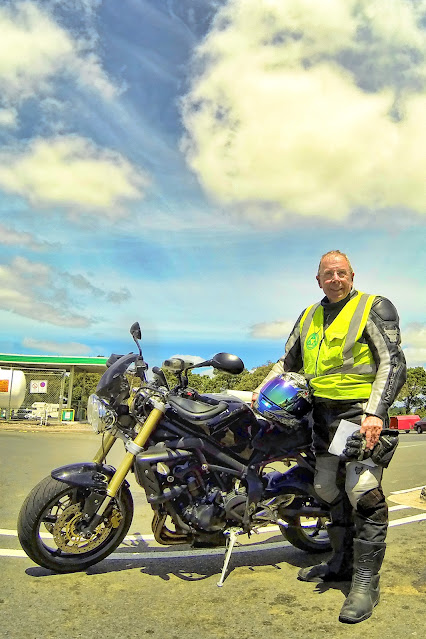
In my early 60's on the Blackbird - a tad light on good skills

Regular readers will remember that I made a series of posts in 2010 and 2011 about motorcycling, the ageing rider and what steps might be useful to prolong one's riding in a competent manner. I was in my early 60's at the time. The posts attracted the attention of well-known U.S - based motorcycle author David Hough and some lively correspondence followed.  In a direct but constructive manner, David called me out to actually do something concrete about future-proofing my own riding.  The first step was to sell the heavy, tall Blackbird and get a lower, lighter bike in the shape of a Triumph Street Triple.  No loss in performance for the type of riding I did and many benefits.

Leaving for the 1600 km in under 24 hours Grand Challenge event - 2010 

From occasional incidents over the years, there was clear room for skills improvement.  I'd never had an independent assessment of my riding and to cut a long story short, I decided to enroll with the NZ branch of IAM RoadSmart UK, which uses Police Roadcraft as the basis of its advanced training.  The initial assessment in early 2011 was quite a shock to the ego but I stuck with it and passed my Advanced Test in late 2011.  The total benefits from taking this option can't be understated and they were detailed HERE .  The journey of upskilling continued, eventually becoming a mentor and Examiner.  As well as a massive increase in my skillset to keep me safe, other benefits such as the value of humility and helping to upskill others had a much wider personal impact and will continue to do so.  Making lifelong friends with people on the same journey was a genuine privilege too. Without doubt, continuous upskilling enabled me to keep riding longer than it would have otherwise done.  I still find myself informally assessing other road users which is a good means of  remaining sharp and staying out of trouble.  You will understand that my wife is excluded from assessment as I don't want to be sucking hospital food through a straw.

IAM trackday 2016 on the GSX-S 1000 (courtesy Barry Holland)

The other critical part of discussions with David Hough and others was about the difficult decision of when it's time to consider retiring from riding. In hindsight, this discussion was to be incredibly useful because there was plenty of time to plan for an angst-free retirement from riding at a future point in time.  Reaching that point very much depends on the individual rider and their circumstances but sooner or later, it's something that all of us are going to face.  Surely it's better to plan for that eventuality than suddenly being faced with the end of a lifetime's passion?

In a nutshell, having a fallback interest or two seems to be the most appropriate means of softening the inevitable change.  In my case, owning a runabout for sea fishing was to become one of the options as it was a pastime which Jennie enjoys too.  Ok, let's be honest ....  she's actually better at it than I am!  Travel is another interest which we both share although that has been partially screwed up by the global impact of Covid.  

Ready for another day of being out-fished by Jennie

However, Covid lockdowns were also largely responsible for some serious thought about retiring from riding sooner rather than later.  There wasn't a "lightbulb" moment but a dawning realisation that I'd achieved all I wanted from a 58 year riding career.  Enjoying a series of challenges during that time through competitive drag racing, long distance endurance events, track days, occasional trail riding and formal upskilling had largely satisfied the urge.  My role as an IAM Examiner often required 500 km days in all weathers and they were becoming less attractive - the one downside of living in a remote rural area.  Also at the back of my mind was the fact that if I did have an accident, a body in its 70's wasn't going to recover quickly.  A serious consideration not only for me but the potential impact on the wider family. 

Out with fellow IAM member Tony and his wicked MT10 SP

Having some fallback interests meant that I could now seriously entertain the thought of stopping riding with no regrets and perhaps surprisingly, the prospect didn't feel like a big deal at long last.  I'd like to think that was largely due to the planning mentioned above.  It was made even easier by an almost throwaway comment by Jennie that we should look at buying a classic car so that we could have even more fun together.  My best friend in the UK is a classic car owner as well as a motorcyclist and after some conversations with him, it seemed like a great way to keep occupied, given my interests and background.  Bloody hell, actually choosing something which appealed to both the CEO and me was a major mission, resulting in sulks and pouty lips for a few months but we finally settled on an MGB GT, a choice never regretted.  The difficult background to that acquisition has been detailed in previous posts but it was serendipitous in one respect.  1972 was the year of manufacture and also the year we got married!

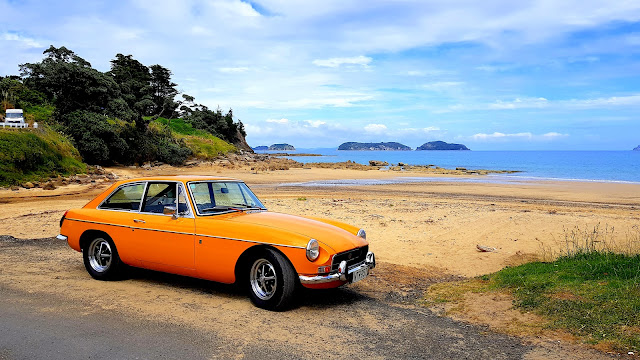
A fine day on the Coromandel Peninsula with the MGB GT

With the decision having been made, the KTM was advertised for sale and the delivery ride to the new owner was surprisingly unsentimental.  I guess this was due to all the prior preparation for retirement, even if the actual endpoint wasn't known.  After retirement, another potential interest also popped up, partially as a means of staying fit as I got older.  I had owned an old road bicycle for at least 30 years but the steep hills in our area combined with age was an issue.  What about an e-mountain bike which would enable me to use it on the many bike trails in our area whilst being kind to my damaged knees?  I took delivery of the Giant E+1 in June 2022 and it's been huge fun, having covered just under 2000 km since then.  Ummm.... we'll skip over falling off and breaking a rib just after taking ownership due to getting a shoelace caught on a pedal.  That won't happen again due to a change of shoes and pedals!  Riding motorcycles has been a real bonus for riding an MTB though, despite the mishap.  Situational awareness, balance and braking to name but 3 benefits.

The Medlock MTB trail, Coromandel

So in summary, giving up a passion (an obsession according to Jennie) hasn't been as difficult as it might otherwise have been, thanks to a bit of planning which effectively started a decade ago. The year since selling the bike has passed quickly with plenty of interests to keep occupied.  I'm still interested in motorcycles but quite happy not to own one.  Not the slightest regret and I guess that it's as close to a perfect outcome as one could hope for!  Still have most of my riding gear, but I'll get round to selling that in due course.

I hope that this post has been of interest to anyone else who has similar decisions to make in due course.

How new challenges normally start!

Monday, 20 December 2021

Thinking back to an early post....

Nearly 11 years ago back in 2011, I wrote a blog post HERE which attracted comment from well known US motorcycle author David Hough which lead to further posts and even a chapter in one of his motorcycle books.  The topic?  The impact of increasing age on motorcycling.  We discussed things we could do to safely extend one's riding career and whether we could recognise that it was perhaps time to do something else.  There are links to the wider discussion in that 2011 post.

Just before the time of the original post, I was 63 and not really planning to do anything massively different, just to keep riding pretty much the way I'd always done and keep fingers crossed.  The only nod towards getting older was to sell my heavy Honda Blackbird and buy a Street Triple.  However, the conversations with David prompted me to join the NZ branch of the UK Institute of Advanced Motorists to learn Police Roadcraft. That lead to what was genuinely the most enjoyable 10 years of a 58 year riding career, passing the Advanced Roadcraft Test, Observer (mentor) Test and ultimately becoming an Examiner.  It was a genuine shock to discover how little I knew about safe riding whilst making good progress before joining IAM.  Made lots of lifelong friends too.

IAM Observer duties on the Street Triple, circa 2014

The other thing which David Hough and I discussed was the need for a fallback interest for when we actually stop riding. That need applies to anything which has been a lifelong passion and even to retirement with little idea of how to spend your free time.  Making properly considered decisions about that can have a massive impact on one's mental and physical health.  I'm pleased to say that talking with family, close friends and even strangers plus lots of reading has given Jennie and I solid fallback interests in terms of voluntary work, travel, sea fishing and more recently, the purchase of a classic car.  With Covid limiting international travel in any meaningful sense for an extended period, the classic car was a locally-based fallback.  For the time being at least, I think we've got that side of the ageing equation reasonably well covered and David Hough deserves enormous credit for provoking some serious thought.  David and I still correspond and recently, he's also followed the same process by building a beautiful wooden rowing boat (a traditional wherry).

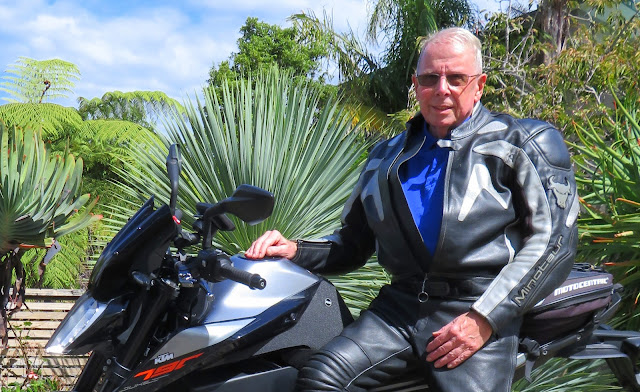
The KTM in 2021 - me at 74 and loving it!

So that's the medium term future reasonably well mapped with a few contingencies but what about now?  This month, I retire from IAM.  A combination of age and the relatively remote area where we live means that I don't want to spend 500km days in all weathers putting advanced riders through formal testing.  Totally comfortable with that.  Having been honoured with life membership of IAM means that I can ride with the membership on social occasions and also with other treasured friends which will help to keep standards up.  Although there are no immediate plans to stop riding, going through the future planning process has made me comfortable about making that decision with no regrets.  Another year will probably do it. No single fallback will replace riding but a combination of things should do the trick.  Ceasing the blog sort of falls into the same category.  Great fun but it's just about served its purpose.

After 6 weeks or so of owning the MGB GT, Jennie and I have been having a lot of fun exploring the Coromandel Peninsula backroads on short(ish) runs.  At present, I've been spending a fair bit of time underneath the thing greasing a myriad of grease nipples, lubricating the steering rack and having smelly old diff oil run down my arm to set up a proper maintenance schedule for the future.  The previous owner did a wonderful job of restoring the MG but he mainly used a local garage to do routine maintenance.  I use both words advisedly as to be honest, it looks like a lot of things were overlooked;  hence the preventive work being done at present.  To give another more succinct viewpoint, Jennie calls my diligence "pissing about in the garage".

Waitete Bay, Coromandel Peninsula.  Miles of nothing but sand and water

To end on an irreverent note, yesterday saw us make a 320km round trip to join fellow MG owners for the regional MG Owners Club Christmas lunch.  We're not big on large gatherings of people but being new to the club, it would be great to meet fellow members.  Crikey, except for another couple of people, we were the youngest there by some margin!  It was a weird feeling as among my motorcycling mates, I'm totally used to being the Old Fart.  A motorcycling friend (and ex-MG Roadster owner) remarked that it was lucky we were in the open air for much of the time as the smell of cabbage water and pee may have been overpowering indoors.  Irreverent indeed!  Mind you, the local organiser drily commented that he had to organise club events with pee stops for both sexes in mind.  I think we'll pass on taking part in those for a few more years! 

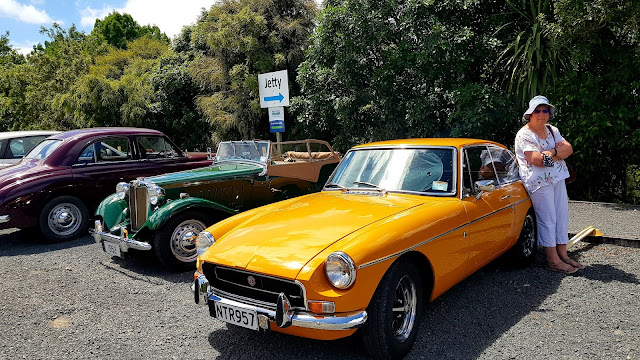
Alongside a 1952 MG TD and a late 50's MG Magnette

All that remains is to wish everyone all that you would wish for yourselves over the festive season and may 2022 be better for all of us than the last couple of years!


Friday, 1 March 2019

When ageing bikers go bad......

Regular readers will remember past comments on this blog, some serious and some flippant; about ageing motorcyclists, risks and strategies to enjoy and safely prolong their riding.  My thoughts about taking the issue seriously was prompted by a series of email exchanges with US motorcycle safety guru and author David Hough.  Those exchanges were summarised in a post from 2011 HERE . 

The exchanges prompted me to raise my skills with the Institute of Advanced Motorists.  It not only gave me new skills but reinvigorated my riding enjoyment too.  It's also opened the opportunity to assist other riders of all ages to upskill too.

Now at 71, it's time to put the next part of the plan into action.  My Suzuki GSX-S 1000 is by no means a heavyweight at 210 kg dry but its centre of gravity is relatively high.  As I seem to be shrinking and am now 5' 7" in old money, a high C of G and being vertically challenged are not a good recipe, especially parking around off-cambers or uneven ground (don't ask me how I know!).

Clearly, it was time to consider a lighter bike but one with good performance, which I've been doing for many months.  As well as weighing up technical specifications, I've been careful to think about that very personal factor - emotional appeal.  The GSX-S was bought rather more quickly than prudent and whilst it's a great bike, it didn't have much emotional appeal.  A simple example is that unlike my old 675 Street Triple, it didn't get patted when I walked past it in the shed! 

Without going into all the reasons why, the two bikes which I thought would fill the technical and emotional sides of buying a new bike are the Triumph Street Triple 765 and the KTM Duke 790.  Time to do some test riding!

If I can draw a very non-PC analogy going back to my late teens or early 20’s, the Triple is equivalent to the smooth, sophisticated chick you meet at the pub. A touch expensive, reliable and predictable in many ways, but nonetheless exciting. Call it the "safe" option if you like. Then there is the slightly dodgy chick, a bit rough and wild, maybe a tad unreliable but is unpredictably exciting. Not the sort that you’d take home to meet Mum but we’ve either fantasised about the latter type or experienced one at first hand. That’s the KTM. (Can’t believe I’ve just written that paragraph but you get the drift and it is probably applicable to both sexes if we're honest about it so being offended is tough luck).

A couple of days ago, it was time to test the Duke 790, nicknamed "The Scalpel".  169 kg, 435 degree “big bang” motor, lean sensitive traction control and ABS, launch control, adjustable wheelie control, track, sport, road and wet weather modes, quick shifter, slipper clutch, steering damper – motorcycle porn for a techo. What’s not to like?

Rocked up to the KTM/Suzuki dealer in Hamilton to find that the dealer principal had just fitted Bridgestone Battlax RS 10 tyres.  This is in anticipation of a trackday he's doing next week.  They are not really a road appropriate tyre as you could almost spread the soft compound with a butter knife.  I think life will be in the hundreds of kilometres!  However, a hot, dry day and the dealer telling me to go and enjoy myself........ what could be better?

Introducing the KTM Duke 790 - aka "The Scalpel"

This bike is deceptively small but the ergonomics are perfect for me.  Just like my old 675 Street Triple, everything is instinctively in the right place.  The seat is about 15 mm higher than the Suzuki but as the seat profile is more rounded, my legs are more vertical when on the ground.  Coupled with the light weight, it's really confidence-inspiring for a shortarse.

No time for heroics on the first outing so "road" mode was selected from the TFT display and the motor started.  There's quite a bark from the standard muffler and you probably wouldn't want it a lot louder to start drawing attention to yourself.  Some nice pops on a trailing throttle too. 

Sexy pipework!

Pull away from the dealership into the traffic and everything feels good.  Leg position feels perfect for my stuffed knees and the seat feels perfectly comfortable,  Great all-round vision too.

Dive down a side road and out into the country.  I'm not sure what I was expecting in terms of performance but crikey, this bike really picks up her skirts and accelerates!  The perfect example of a great power to weight ratio and not needing massive horsepower to get stunning performance.  The clutchless quick shifter works a treat when you have the throttle pinned but is a little more vague at low throttle openings ,  Downshifts using it are universally good. 

I love the engine note but don't quite know what to make of it as it's almost unique.  It's not like a conventional twin because of the firing order.  Sometimes, there's a hint of V twin and at other times, it feels like a stonking big single.  Yet another point of difference compared with the opposition.

Into the twisties and the reason for the nickname "Scalpel" becomes apparent.  It eats corners with virtually no input from the rider other than getting the entry position right.  Getting entry speed right seemed less critical - just lean it a bit more!  And boy, do those RS 10's stick!   

Evidence of an enjoyable test ride

In fairness, I didn't push as hard as the state of the tyres might suggest.  The dealer principal had already given them a good workout to and from his home and I just added to that.  With the coarse chip of the roads I took it on (compared with a track) and air temperatures of around 30 degrees C, it wasn't hard to start making inroads on their life.

For most roads out in the countryside, the first 5 gears were more than adequate and at the legal limit of 100 km/hr, 6th gear felt a bit like an overdrive.  That was probably exacerbated by the motor still being a bit tight.  It felt better at higher (illegal) speeds and as it's capable of around 230 km/hr, you wouldn't want to engage the higher gears too early unless you're in economy mode.

Looks like a preying mantis with its LED headlight - skinny too

After some enthusiastic riding in the countryside, I realised that I was absolutely fizzing - genuinely taken by surprise as to how good it was and how much I was enjoying it.  Modern bikes, excepting the odd lemon, are universally good.  I guess this can mean that they can be a bit "same old, same old".  The Duke breaks this mould and the experience is incredibly refreshing.  It adds a genuinely different experience.

I put it in sport mode on the edge of coming back into the city just out of curiosity and it was significantly more sensitive to small changes in throttle opening and skittery.  It may settle down as the motor beds in but in reality, it's no big deal to keep it in "road" mode.  

Coming back into the dealership, my feeling was almost identical to the time I first took a 675 Street Triple out after owning the Blackbird for 8 years.  That feeling can be summed up as " I want it and I want it NOW".  A deal was quickly done as I've used the dealer for servicing my bikes since 2001.  As of next week, the Suzuki will be no more and a KTM will grace the shed.  Remember the rough chick analogy?  Exciting times ahead and will report back with a more thorough review in due course.  Experiences like this are what keeps us young!

As with my old Street Triple, the KTM is the sort of bike which encourages immoderate behaviour.  I'm going to have to watch that!

Oh, the black and silver colour scheme as opposed to the traditional KTM orange is partially down to Jennie.  She doesn't like the orange which I think partially translates as an old fart on an orange bike doesn't look right!  No problem with this as the black and silver matches my leathers and hopefully will draw less attention of the wrong kind!

Addendum: 1500 km update HERE

The smile says it all!


Wednesday, 30 March 2011

What do old farts know about riding motorcycles?

 Old body, the enthusiasm of a 20 year old, but with more skill and cunning!

Regular readers will remember the Feburary posts about strategies for ageing riders to continue riding for as long as possible, and earlier posts about skill training.  The ageing rider posts were prompted by  my discussions with David Hough, a world-renowned motorcycle author, particularly in the area of safety and skills.

Coming back from holiday, there was another email from David covering a few more points about ageing and also mentioning some difficulties with mentoring/skill transfer across generations.  I've reproduced it verbatim below as it was one of the most succinct and cogent pieces of writing I've seen for a long while.  See what you think.

Hi Geoff,
I'm in the process of reading a book, Healthy Aging, by Andrew Weil, M.D. Of course, he's talking about humans in general, not motorcyclists, but what he says strikes a chord. Feel free to share this.
One reason why younger people dislike thinking about aging--or even looking at older people--is that it's a reminder of our own mortality. We all know that none of us get out of this alive, but we don't want to rush the issue. Young people tend to do focus on the excitement of the day, taking chances that seem to offer something. Younger motorcyclists seem to find aggressive riding attractive, and measure other riders by their speed. Of course, getting to the Rock Store--or the Puhoi Pub--first is mostly a matter of taking greater risks rather than having greater skill. Adrenaline can be addictive.
I remember a Canadian rider who was known to be "fearless." He would go by other riders so fast they were instantly demoralized. I once asked him about his fast and risky riding. He replied, "If I'm going to crash, I want it to be fatal. I don't want to have a piddling crash that just puts me in the hospital for a while." Of course, that was when he was about 40. Later he married and had a child, and his attitude changed dramatically. 
But I suspect that many riders have a similar attitude when young. We don't want to go out stumbling and drooling, we'd rather go out in a blaze of glory. Sorry, but that's not realistic. Well, OK, it's realistic for a huge number of young riders who snuff themselves out prematurely due to failure of skill and lack of situational awareness. But most of us just continue to ride and grow older. Everything grows older, including our homes and our motorcycles. 
My point here is that I think motorcyclists prefer to just not think about the aging process. We don't want to have to think about being old until we get there. "I'll cross that bridge when I come to it." But what we do in our youth and middle age has a direct bearing on how it's going to go when we "get to the bridge." For example, the person who takes up smoking as a teenager finds it difficult to quit once the damage become apparent. Then as the smoker grows older, the exposure to nicotine vapor may result in uncomfortable and messy physical problems.
In his book "Healthy Aging," Dr. Andrew Weil notes that we can't extend life. There is no "fountain of youth." Our bodies eventually reach the point where they fail, and we die. But Weil suggests that life is much more enjoyable if we take steps to stay as healthy as possible for more of the years we have left. The idea is to have a long, healthy life, and fail quickly, rather than degrade slowly. It's not unlike my Canadian friend's attitude, but it's stretched out over many more years. Weil has lots of suggestions about diet, supplements, and exercise, of course. If you want more about that, I could oblige. 
Some cultures value and admire older people, just as we tend to admire antique bikes, vintage wine, and aged whiskey. Revering old people is particularly common in some oriental cultures, especially Okinawan. There is some recognition that the elderly have something worthwhile to offer, which also gives younger people something to look forward to. I suspect that in our "western" cultures some younger motorcyclists might be interested in old bikes, but seldom revere older riders. I continue to do riding skills seminars, but I often get the feeling that many in my audiences are mentally weighing how much advice an old guy could offer, even after a million or so miles of experience. "Things are different today. What could you possibly offer?" But offering knowledge to younger people helps me feel useful, and of course feeling needed has a lot to do with mental health. So, I'm continuing to write and lead seminars, whether my audience is respectful, or not.
Years ago I was invited to do some skills seminars at a rally. At the appointed time there was a small group of riders--perhaps a dozen--who were willing to listen to what I had to say. We were gathered around a picnic table, but there were other tables around us occupied by riders who were obviously not interested. As I talked, riders at an adjacent table began talking and laughing loudly. This wasn't just impoliteness. It was a message that "we're not interested in some steenkin' old fart telling us how to ride."
I don't hold any grudge against those less interested riders. They are like the rain. There is no point in cursing the rain when it falls, or shouting for it to stop. It is what it is. If you want to avoid getting wet, wear waterproofs--or stay inside. If you want to control noise, make a point of getting an inside room, or at least a separate area. Or, arrange for a sound system that will override even the most annoying hangers-on.
I don't know how our respect of elders might be increased among motorcyclists. But I suggest for those of us who are motorcycling veterans, offering to teach, or writing, not only has a potential benefit to younger riders, but also helps us maintain our health longer. I've been in situations where my advice was not wanted or valued. Of course, I have the experience of years. I continue to do seminars. And over the years the younger, brasher, less interested riders have gradually drifted away. There are now more riders who can participate in a respectful dialogue.
David L. Hough


...... and with writing like that, it's clear why David has earned the huge respect that he has among the motorcycling community.


.

Thursday, 10 February 2011

Ageing motorcyclists - a follow-up

Just thought I'd add a wash-up to the recent post What's age got to do with it?.  As well as having some fantastic direct feedback on the blog itself, there was a similar response from a number of bike forums I put the link on to help David Hough get as much info as possible.

David has found the replies to be a really valuable insight to how a wide spectrum of “mature” riders think about riding as they age so thanks so much for the comments, it really is appreciated. Whilst there’s some common themes, there are also significant differences. I guess this comes from particular traits of each national motorcycling scene - the level of training, type of roads, types of bikes, age of riders and so on.

Whilst “Acts of God” can’t be planned for, the common insights to keep riding into old age are: ride regularly, keep your skills up through formal training, keep healthy/reasonably fit and if you need to get a lighter or smaller bike at some stage, just go and do it and forget about “Little Dick” Syndrome! And the other important thing is that when the time finally comes to give up bikes, have a fall-back to put your passions and energies into if you haven’t already got one. Having plenty of interests is one contributor to a rich and hopefully long life.

If you haven't seen all of the comments below the previous blog post about ageing motorcyclists, fellow blogger Julian Pearce of Tarsnakes  fame gave some valuable insights on a holistic approach to the whole business of riding safely.  I recently had an email from him and in it, he also gave a couple of really interesting, indeed valuable links to radio transcripts about the ageing process.  In them, there's reference to the concept of "successful/exceptional" ageing which has close parallels with  a lot of the items raised in the discussion on how to continue riding as we age.  If anyone is interested, here are the links:  Linda Fried 1  and Linda Fried 2.  It seems to me that the more we read on successful strategies and internalise them, the more prepared we are for a long future on 2 wheels!

I previously mentioned David’s huge riding pedigree so his thoughts are well worth chewing over. I have his permission to publish his comments to me when we were shooting the breeze on this topic. I haven’t edited them at all and it’s both valuable and interesting to see David’s take on the subject. Hope it stirs what grey matter we have remaining and lets us ride longer in safety!  From a personal viewpoint, I'm extremely grateful to him for the opportunity to think more deeply about the topic than I might otherwise have done.

Where to from here?  Well, we're still chewing the fat and it's not beyond the realms of possibility that David will produce either articles or a publication which may be of benefit to "mature" riders everywhere.  I certainly hope that this is the outcome. I'm also in the process of seeing whether I can persuade one of our national bike mags to run a piece on the topic.

Y'know, just thinking on the fly from David's chance contact and how it's evolved, including great feedback from a small selection of bike forums; this approach with some sort of central clearing house for universal motorcycling issues could be a real winner!

David L Hough


DAVID’S MUSINGS SO FAR
I had a chance to review the various sites you listed. You can quote, reference, or post anything I've sent to you. Your stirring the pot is producing some valuable feedback.

One important bit of feedback is riders recognizing the important concept that there is no "light switch" moment when that guy in the mirror is suddenly too old to ride anymore. Younger riders seem to depend more on testosterone, and some "western movie" fantasy that they can slap leather now without looking back, and then somewhere way down the road (and too far to think about) get shot out of the saddle at the old age of 65 or 70.

My experience has been that the body ages much like an old bike, a part rusting here, a bearing seizing there. There is no point in parking it--or your body--just because of some partial failure. You get your knee meniscus pruned, your hip replaced, prescription eye glasses, etc. Yes, it's possible for some of us to continue riding aggressively beyond age 70 or 75 or 80. But we can't ignore the continuing degradation of our physical and mental skills. Why do so many posts refer to a lighter, lower bike? Because it's typical for leg strength, mobility, and nerve feedback to degrade, reducing the ability to hold the bike up.

What few seem to have commented upon is that attitude typically changes, as well as physical ability. Where at age 35 or 40 it seemed very important to ride swiftly, I've discovered at "over 70" that riding swiftly doesn't seem as important anymore. Speed is relegated to just one factor in the experience of riding. I can putt along at the speed limit, or even slower on a vacant road, listening to the birds, gawking at the farm animals, or just enjoying the smell of a freshly mown field. I realize that younger, less patient riders might think this is a cop out; that I'm trying to come up with justification for being a wuss. No, it's actually a change in my mindset. So, I'd ask the question: are you prepared for your attitude about motorcycling to change? Do you think you'll get to a point--10 or 15 years down the road--where you'll get just as much joy out of sitting in your garage running your eyes over your machine, or your fleet, without having to start an engine? Would it be fun to trailer a vintage bike to a rally and just ride it around the grounds? Or, do you think you'll always have that need to get on the bike and go somewhere, perhaps even at aggressive speeds?

Friends in Woking, England had moved up to a BMW KLT a few years ago. At about age 75, he bought a Suzuki Bergman scooter, and for a few years they continued to tour Europe on the scooter, doing whatever they would have been doing on the LT but with much less effort and expense. I've lost contact with them. I believe the wife's health was failing, and it just wasn't acceptable for the husband to go riding without her. I suspect if they still own the Bergman, but it only gets ridden into town.

Another friend in the UK rode for years, and at about age 70 dropped his Triumph on some slick paving. He sold the bike, and purchased a sports car. The condition of road surfaces in the UK were too much of a crap shoot to risk on a bike anymore.

Having ridden in NZ, including the Coromandel Peninsula, I'm aware of the great twisty nature of the roads. If I were riding NZ, I'd probably not be on a rigid three-wheeler, because it just takes too much energy to stuff a rigid trike or rig through tight turns all day--even with power steering. A Piaggio MP3 might be a good alternative for those wishing for better stability. Yep, a Miata will take corners as well as a Spyder. But the Spyder is (just about everywhere) a motorcycle, if it's motorcycling that floats your boat rather than just taking corners fast.

My point of raising the issue of aging is that there typically isn't a sudden point where you realize and accept that your current style of riding is over. We like to talk about those aging parents and grandparents who are a danger on the road, and should wake up and turn in their keys. We don’t like to think about being the aging parent or grandparent who needs to give up the keys. I think it would be helpful to come up with some guidelines to assist aging riders to judge their fitness for duty. If you have a nasty crash at age 68, is that a good indicator you are necking in on your riding career? Or will it take two crashes, or three crashes before you get the message that it's time to hang up your leathers? It's not just the pain and recuperation I'm thinking about, but the expense and bother to your family. Here in the USA, I'm covered by Medicare, but there are deductibles. A decent crash might cost me $8,000. When I had to be evacuated by air from my crash in the California desert, the original bill was $38,000, just for the 40 minute helicopter ride. Fortunately, Medicare whacked that in half, and paid 80%. But running up big medical bills is definitely a bigger concern when I hop on a motorcycle than when I'm hopping in the truck.

Into that discussion, we need to remember the role of prescription medications. Prior to my most recent crash, I had been on pain killers for a painful sciatic nerve, in addition to my usual diabetic meds. I have to believe that the optical illusions I was experiencing as the crash happened were a result of the medications. Perhaps I had to learn the hard way, but I'm now aware of the importance of really evaluating yourself prior to a ride. Maybe the ride should be scrubbed, or at least shortened. Definitely I should not have ridden with others who would set a more aggressive pace than I would have ridden on my own under the circumstances.

We might also wonder about the relationship between motorcycling and mental health. Brain researchers are beginning to understand that the aging brain doesn't just lose capacity, although it typically loses processing speed. What's most important is that not being mentally challenged by problems allows the brain to lose thinking capacity. And motorcycling is definitely an activity that requires lots of thinking--both conscious and subconscious. Maybe that old saying is right, after all: "You don't give up motorcycling because you grow old, you grow old when you give up motorcycling."

Speaking for myself, carrying on dialogue such as this helps me keep my brain working.

One of the responses to your aging blog referred to "crossing the bridge when I come to it." That assumes that the aging process is like a road, and the bridge is a decision point, although a bridge is really just a means to zip on across a chasm with impunity. I think it's a natural reaction of younger people to be fearful of addressing the future, not only because it's uncomfortable, but because it’s such an unknown.

I think that attitude is a parallel to motorcycling, where in our youth we tend to throw caution to the wind, and as we grow older we can't avoid remembering all the pitfalls we've seen along the way. The young rider doesn't want to think about the risks. I suspect the issue of aging is like any other--we tend to go into denial when it gets uncomfortable. Let's see, what are the steps of denial? It won't happen to me. If it does happen to me it won't be as bad as they say...etc.

Please do keep up the pressure on this issue. I think we can glean some great ideas from the dialogue. The naysayers are just as important as those who nod sagely.

Several years ago a friend and I were strolling around the grounds of the BMWMOA International rally, pondering what might happen in our motorcycling futures. I asked if there was anything "wrong" with transporting a smaller or older machine to the rally, to provide an opportunity to rub elbows with fellow owners. IOW, would the experience of sharing the passion be just as much fun as actually riding a bike cross country?

Several years later, I found myself in distress just weeks before my scheduled departure for a rally in Wisconsin, give or take 2,500 miles away. My left ankle had gone south (plantar fasciitis or whatever). I could barely hobble around, let alone shift the transmission a few thousand times. Finally, I ended up loading the sidecar outfit on a trailer, and towing it behind the Toyota 4Runner (auto trans). During the several day journey I had lots of time to think about the situation. Basically, I decided that whether riding or driving, I was no longer up to the challenge of traveling thousands of miles to a rally. Too much money, too much time, too much fuel consumed, too much effort...The purpose of the rig was to allow me to travel long distances, so its services were no longer needed. I ended up donating the sidecar rig to the MOA Foundation, to raise money for safety projects, and towing the empty trailer home. I figured the K1/EZS outfit had been paid for by royalties from my book, so it was appropriate to give it back to the enthusiasts.

It used to be that I worried more about the machine failing than myself. Now I'm more concerned about myself than the machine. One of my reasons for getting the paddle-shift Spyder was to allow driving it even if my shifter ankle went out. There's a laugh in this. I haven't had any debilitating ankle problems since buying it. And I'm aware that my left thumb could stop working, or my back goes flooey, or whatever. Last summer (prior to my Triple R crash) I had agreed to attend a BMW rally in eastern Oregon. Then because of sciatica, I just couldn't travel at all. I reluctantly had to cancel my seminars. The decaying of my body is prompting me to not agree to be a guest speaker anywhere. I'm trying to resolve this, maybe by agreeing to appear, knowing I might have to cancel (as I did with the OR rally) I suppose as long as they want me to appear, I should continue to make plans, figuring out ways to politely cancel.

Maybe I should encourage the event to have a computer and Skype connection handy, as a fallback plan.

Racing Ducati Desmosedici RR rider in NZ - age is no barrier!

Friday, 4 February 2011

What's age got to do with it?

The title is just one word different from Tina Turner's classic song, but a whole world of meaning away!

A few days ago, I had an email from David L Hough in response to the recent Speed doesn't kill, stupidity kills post, plus other posts on motorcycle safety. If David's name doesn't immediately ring a bell, he's an eminent American author on motorcycle safety and skills (see Wikipedia entry) and I felt somewhat humbled and a bit over-awed that someone of his eminence had bothered to get in touch with an average Kiwi rider.  However, I felt a bit more comfortable when he said that on reading some of my blog posts, it was clear that I'd been thinking about my age relative to riding a motorcycle, which is perfectly correct.

 David L Hough

By way of background, he mentioned that was 73, had travelled over a million miles by bike - an incredible pedigree!  He went on to say that 3 years ago, he'd had an accident on a BMW 1150 GS in a remote desert area of California and as a result of that and presumably considering his own mortality;  now rides a Can-Am Spyder.  He went on to say that the mean age of motorcyclists in the USA is increasing, indeed accelerating.

David asked what, if any, thoughts I had with respect to increasing age and its impact on my riding.  Part of this enquiry was whether I had a plan for the next 5, 10, 15 or 20 years. I thought that the topic was both interesting and relevant, especially as motorcycles have progressively switched from cheap transport for impoverished young people to more of a lifestyle choice for riders of all ages.  In terms of ageing, I guess the term is pretty broad as we're all ageing as part of the natural process and I have no difficulty including returning riders after raising a young family or establishing a career etc.

I retired at 60 to enjoy life whilst my wife and I enjoyed good health.  Not long after retirement, I was undertaking a short-term consultancy job for my old company and I'd been to a conference on their behalf.  I used my Blackbird and on the way home, had a walking-speed accident when my foot slipped on gravel when turning round on a narrow road.  The fairing crash knob hit my leg and it suffered internal bleeding.  My fault entirely for failing to notice the gravel.  The 2 months away from riding and hobbling around gave me plenty of time to ponder the future.  I'm completely passionate about riding and must say that giving up never entered the equation but what to do?  The Honda CBR1100XX Blackbird I'd owned for 8 years was a little tall for me (I'm 5' 8"), especially with its raised ride height to improve handling.  The centre of gravity was also quite high.  This lead to some degree of instability when manoeuvring at low speed or parking.  As I aged and lost a bit of muscle tone, it became more noticeable.  It was also exacerbated by road cambers in the area where we now live and also the off-cambers around our house which is on the side of a hill. 

The answer was to get a lighter, lower sport-orientated bike with good ergonomics.  More difficult than you might think.  I still wanted handling and performance but the number of bikes with a seat height of around 800mm excepting cruisers are in the minority.  The other obstacle was to put it crudely, "little dick syndrome"!  I was used to riding the Blackbird hard and fast with my riding partners, most of whom are younger than me.  I honestly felt that getting a smaller bike would be akin to losing a bit of my manhood.  Ludicrous, but that's how I felt.  To cut a long story short, subsequent ownership of the Triumph Street Triple has been a joy on all counts and a smart move.  It's rejuvenated my motorcycling enjoyment.  Incidentally, you'll find more detail about all this in my blog posts from about 12 months or so ago, including a photo of a rainbow-coloured leg!

However, I thought I'd share other relevant bits of the discussion with David so far in case others have been thinking about the subject and might wish to articulate their thoughts.

Old dog, new tricks!  Yours truly (centre) with great mates, having successfully completed the Southern Cross round NZ in 5 days endurance ride in 2005

Chronological age is clearly going to have a bearing on fitness to ride in terms of physical condition, mental attitude, reaction time and so on.  However, such factors will have such a huge variation between individuals that age itself will have little relevance across the board.  Skill level certainly will have a major bearing. In the recent post on advanced situational awareness coaching, one forum respondent asked what was the point of him wasting time in undertaking any advanced training when all he wanted to do was cruise slowly on his bike and not bother anyone.  It sounds like he missed the point that good situational awareness is applicable at all speeds in terms of keeping you from harm.  Now coming directly to the point, any skill (or physical activity) if not regularly used diminishes, probably more rapidly as we age.  This is why I'm a strong advocate of refresher training, particularly as we get older - probably the most important consideration of all.  Not only is it beneficial for its basic purpose, but I suspect that it could also be a good personal "honesty" indicator with respect to whether you can cope any more.  Incidentally, I now try to cycle regularly too to keep up basic fitness levels!

I don't have a long-term plan other than to keep riding as long as possible.  This isn't just a blind faith option, simply a statement of intent as I love it so much.  Switching to a Street Triple with its lighter weight meets current requirements perfectly.  I'm not opposed to owning a cruiser with their low C of G and correspondingly low seat height - it would certainly entice Jennie back onto the pillion.  Maybe I ought to give one a try.   Maybe an English classic or the modern equivalent.  So in short, although I don't have a clear plan, there are some options when the next stage comes. Have done a fair bit of roadcraft training but have never done a coached track day yet so at 63 years of age, that could well be addressed this year!

Mental attitude, or call it a love of life if you like is probably as important as any of the other factors.  I've had a number of other strong interests at various stages of my life including sailing competitively at national championship level but motorcycling is the only interest that I've been enduringly passionate about.  It would certainly leave a big hole if I was to give it up BUT.....!!!!  To have no interests is to wither and die.  Living on the coast, we have a boat and go fishing regularly.  Jennie has a tweaked open-top sports car which is huge fun to drive and should I just be restricted to driving a car, something like a Lotus 7 replica might be sufficient to keep the juices flowing! We also enjoy travelling.  What I'm saying is that I do have some fall-backs for when the time comes to give up motorcycling.  Life is for living and I'm not the sort of person who could currently just sit around, waiting for God! 

Honda Blackbird-engined Lotus look-alike
The perfect weapon after bikes?

Sooooooo......  to finish off with some of David's questions, are we capable of making honest judgements about our fitness to ride? What are the measurements or tests to determine whether you are fit to ride? Is a crash an indication you aren't fit anymore, or just bad luck? Do you give up riding just because your knee, ankle, or back have chronic problems? Or do you stay off the machine when your body is complaining, and ride only when it allows you to? And, most importantly, if motorcycling has been your primary interest in life, how do you deal with your interests waning?  Food for thought for a fair percentage of riders perhaps.

Update:  http://geoffjames.blogspot.co.nz/2011/02/ageing-motorcyclists-follow-up.html

Also, I finally found a training programme with the Institute of Advanced Motorcyclists (IAM) that has raised my competence beyond what I thought possible - literally a life-saver.  To read a synopsis:
http://geoffjames.blogspot.co.nz/2011/11/raising-my-riding-skills-some.html